

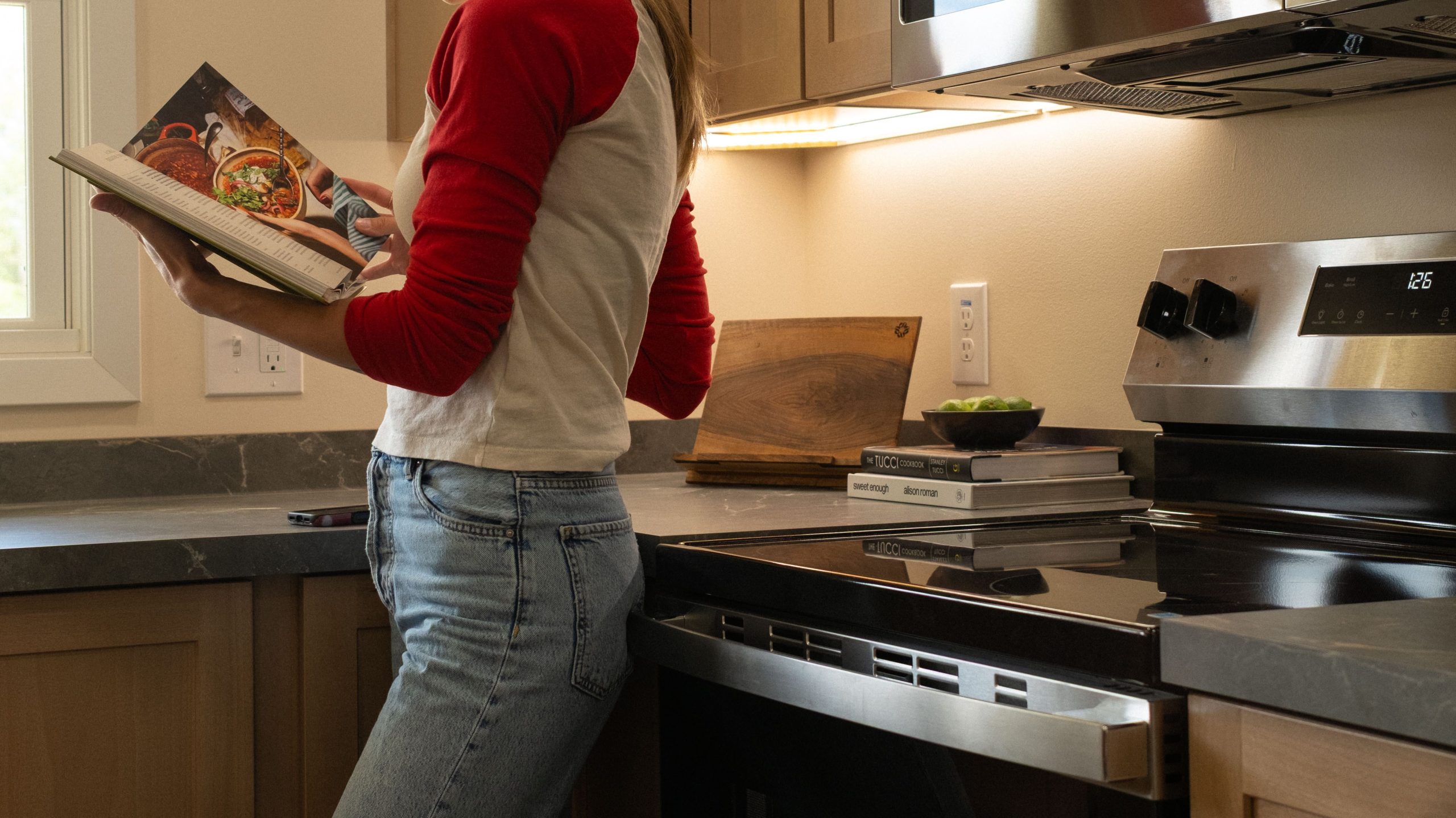
As designers, we’re trained to think about space not only as a container, but as a tool that can either support your life or quietly work against it. The good news is that you don’t need a full renovation to make your home more functional. With a shift in mindset and a few strategic changes, your existing house can begin to work for you, rather than against you.
Let’s walk through how to approach your home like a designer would: objectively, intentionally, and with your real life at the center of it all.
Start with Decluttering
Before you rearrange furniture or buy storage bins, you need to declutter. Every object in your home competes for your attention. This might seem like a daunting first task, but this step is about making your home easier to live in and maintain.
When you have too many items in a space, everything becomes more difficult. Getting dressed takes longer because there are too many choices. Cleaning feels overwhelming because there’s too much to move around. Even simple tasks, like finding your phone or putting things away, become frustrating.
From an organizing perspective, clutter creates friction. The more you have, the more decisions you’re forced to make throughout the day: what to keep out, what to put away, and where things belong. That constant decision-making leads to decision fatigue, which leads to procrastination, irritability, brain fog, and anxiety.
There’s a concept called “Hick’s Law” that states the time it takes for a person to make a decision increases with the number and complexity of choices they face. There is a scientific formula and a lot of contextual information supporting this idea, but in your home, Hick’s law shows up as overstuffed closets, crowded countertops, overflowing junk drawers, and basements stacked to the ceiling with totes. When you reduce the number of items, you naturally make your space easier to use.
Decluttering isn’t about having less just for the sake of it: it’s about keeping what supports your daily life and removing the excess, making the things that matter most easier to see, access and maintain.
Give Everything a Home
Once you’ve eliminated the excess, the next step is making sure everything that remains has a designated place. One of the most common homeowner frustrations is constantly moving the same items from one surface to another. Shoes pile up by the door, mail accumulates on the island, and phone chargers move from room to room.
When your items don’t have a permanent home, your house becomes a series of temporary storage locations.
Take a walk through your home with a notepad and pay attention to where your clutter naturally accumulates. These spots often reveal a mismatch between how the space was designed and how you actually live. Instead of fighting your habits, you must design around them. If everyone drops their keys by the garage entry, create a dedicated landing zone there. If backpacks always end up on the dining room chairs, consider adding hooks or cubbies near your home’s entry or dedicated homework space.
Good design supports existing behavior rather than trying to change it.
Analyze How You Use Your Space
One of the biggest mistakes clients make is assigning rooms based on what they’re called rather than how they’re actually used. Many homes have spaces that are technically functional, but in reality, are practically wasted. Formal dining rooms become storage rooms, spare bedrooms collect exercise equipment, and basement corners house totes of holiday décor. Large corners sit empty because no one knows what to do with them.
Designers often begin by taking a step back and asking a simple question: How do you actually live? Before we get there, let me share something that happens with almost every client I’ve ever worked with. Within minutes of stepping through the front door, some variation of the same sentence comes out:
“Sorry for the mess!” “Don’t mind the state of this place.” “I swear it’s normally not this messy…”
I can promise you, we’re not judging. Seeing your home exactly as it is on an ordinary day is one of the most valuable parts of the entire design process. Whether it’s cluttered or not (and chances are, if you’re calling a designer, there’s probably some level of frustration with how your current space is functioning), those everyday conditions tell us far more than a perfectly staged house ever could.
We’re not looking at the stack of mail on the kitchen counter and thinking you need to be more organized. We see an opportunity for a dedicated mail-drop zone where household paperwork can be sorted and managed. We’re not judging the pile of shoes by the back door. We recognize that your family needs a better landing space when they come home. We’re not bothered by the backpacks slung into the dining chairs. We see that you have a storage problem that’s waiting for a design solution.
What feels like evidence of disorganization is, more often than not, evidence of a home that isn’t fully supporting your lifestyle. The goal isn’t to force your family into someone else’s version of organization, but rather to create spaces that work with your pre-existing habits, routines, and daily life.
Take inventory of the spaces in your home and assess if they’re under or over-utilized. If your dining room is untouched because you never entertain, that space could become an office, home library, or craft room. Your oversized bedroom could house a reading nook. Even wide hallways or awkward stair landings can become functional with thoughtful planning.
Think Vertically
Most homeowners run out of storage long before they run out of space. Often, the problem lies in the instinct to focus on floor space while ignoring the surrounding walls. Vertical storage is one of the simplest ways to increase functionality without making a room feel crowded.
Tall bookcases, wall-mounted shelves, built-in casework, hooks and peg rails can all dramatically increase storage capacity while preserving valuable floor area. In kitchens, ceiling-hung pot racks and magnetic knife strips maximize available space in existing cabinets. In closets, even a relatively cheap wire closet system will double your usable storage.
The goal here isn’t to fille every wall but better use the space you already have. Though we often talk about home size in available square footage, the volume of your home is what really matters.
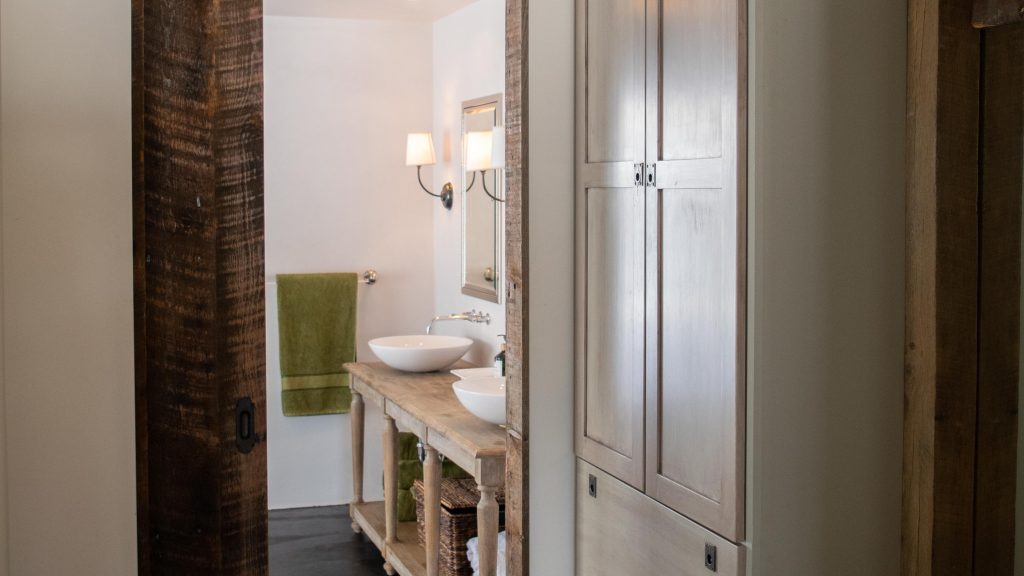
The Value of Thoughtful Selection
Creating a functional home doesn’t mean buying more. In many cases, it means repurposing existing belongings, buying less, and choosing better.
Take a fresh look at the pieces you already own and make an inventory. A half-full dresser in the guest room can be relocated to another room to solve a storage shortage. Bookcases can become pantry shelving. An old end table might become the perfect family drop-zone.
The same principle applies to furniture layout. If a space feels awkward and cramped, experiment with moving furniture before assuming the room is too small. Circulation, sight lines, and furniture placement have the capability to dramatically improve how a space functions.
If a new purchase is necessary, approach the idea thoughtfully. Creating a functional home doesn’t mean buying more; rather, it means buying less and choosing better. Every item that enters your home should serve a purpose and earn its place. Before making a purchase, take the time to research each item thoroughly. Read reviews, understand the materials, and consider how it will wear in and perform years from now. Though it might look nice today, will it still look nice in two years down the road?
A home filled with carefully selected pieces tends to feel calmer, more intentional, and easier to maintain. The goal isn’t to be the house with the most things. Own the right things and make the most of what you already have.
Use Light as a Design Tool
One of the most overlooked and important aspects of smarter living is lighting. A well-lit home feels more welcoming, functional, and spacious. Lighting directly impacts mood, productivity, energy levels, and our perception of space, yet many homes rely on a single overhead fixture and miss opportunities to create a more supportive environment.
Begin with evaluating your home’s relationship with natural light. Which rooms receive the best morning sun? Which spaces feel dark throughout the day? Is furniture blocking windows or views? Simple changes, like opening the curtains first thing in the morning, repositioning furniture, or incorporating lighter finishes, all significantly improve daylight distribution.
When natural light is limited, supplement it thoughtfully with layered lighting. Combine ambient lighting for overall illumination with task lighting for activities like reading and cooking, then add accent lighting to create warmth and visual interest. Strategically placed mirrors can reflect natural light deeper into a room, while finishes with a subtle sheen can bounce light throughout a space. A long, narrow living room with windows at one end can feel noticeably brighter with the right combination of reflective surfaces and lighting layers.
Design Around Real Life

At its core, smarter living is about reducing friction, not achieving perfection. A well-designed home makes daily tasks easier. It helps you find what you need, maintain what you own, and spend less time managing your environment. It supports your routines, reflects your priorities, and creates space for the things in your life that matter most.
The best homes aren’t necessarily the largest, newest, or most expensive: they’re the ones that have been thoughtfully shaped around the people who live in them.
When you begin looking at your home through that lens, every challenge becomes an opportunity! With careful observation and intentional changes, your home can become more than just a place to live: it can become a tool that helps you live your life better.
The good news is that anyone can start this process. Sometimes, the solutions are simple and become obvious once you begin paying attention to how your home supports (or hinders!) your daily routines. If you’re struggling to identify those opportunities on your own, that’s exactly what we’re trained to do. One of the most rewarding parts of our job is helping homeowners see the possibilities and uncover hidden potential in their spaces. We all deserve homes that feel functional, comfortable, and supportive of the lives being lived inside them.
Written by Elaine Nienhouse | Published July 3, 2026